Joan Baez – My First Concert – and the First Disappointment
How One Record Unlocked a Concert I’d Almost Forgotten
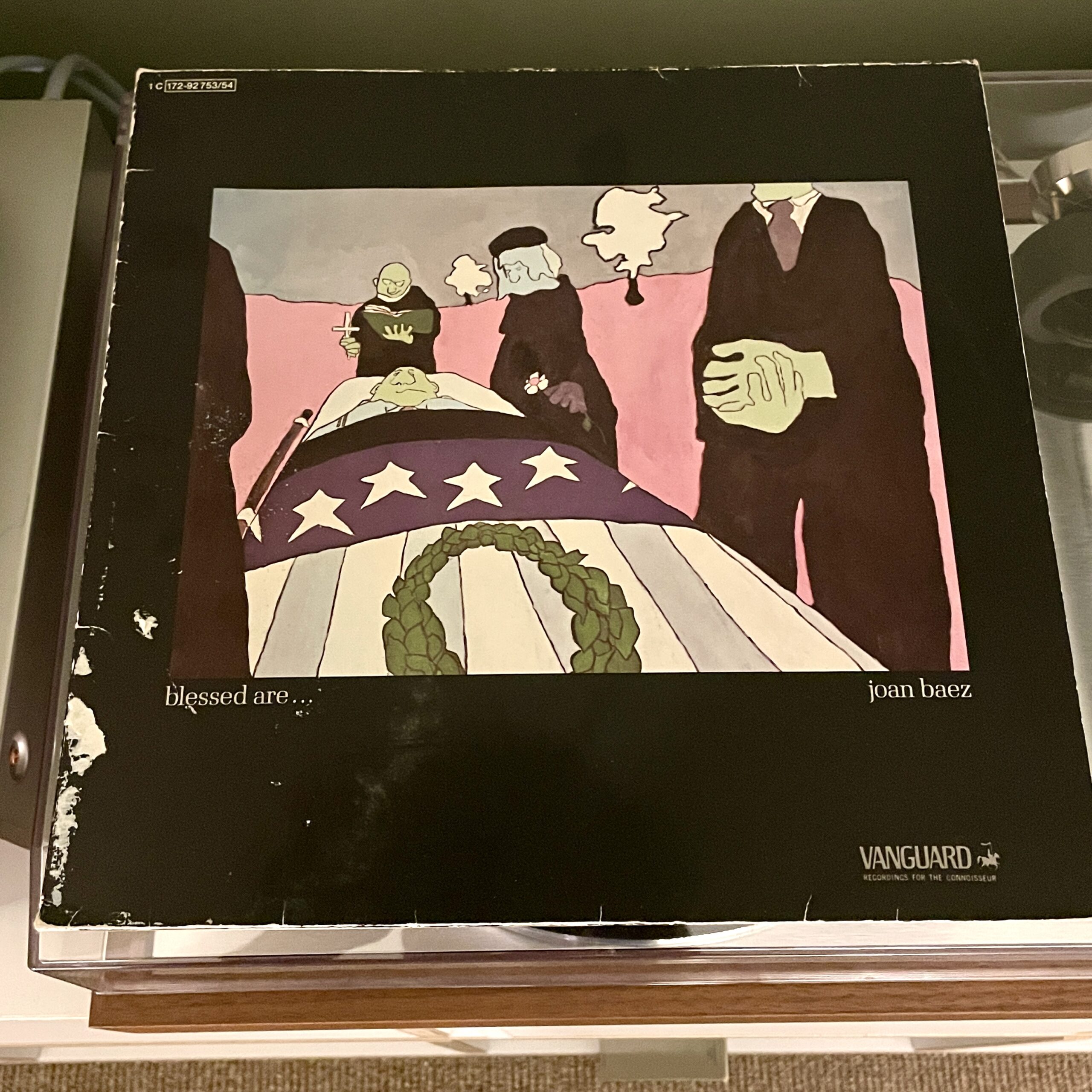
Some records don’t just play music—they open doors you didn’t realise were still there. I bought Blessed Are… by Joan Baez in the late ’70s, years after its release, and it’s sat quietly in my collection ever since. But listening to it again the other day, something shifted. A forgotten memory surfaced—my first concert in Munich. I went alone, which was rare for me. I wasn’t the type to seek out experiences on my own. And yet, there I was.

Joan Baez (Credit: Concord Music Group)
My First Concert—And Why It Fell Flat
What really anchors this record in my personal history is that Joan Baez was the first artist I ever saw live after moving back to Munich, following seven years of high school in Italy. It was an open-air concert in June 1984. I went alone—something that felt oddly bold at the time, even though I was no longer a child. I’ve never been the solitary type, not someone who seeks out experiences in isolation. I want to share things—emotions, flavours, sounds, impressions—with people I care about. So showing up to this concert by myself was an exception. I can’t quite remember why I bought the ticket—Baez wasn’t exactly a favourite—but I do remember walking away with a vague sense of disappointment.
The songs sounded different. The arrangements had changed. Some lyrics were altered or skipped. As a young adult I didn’t yet understand the nature of live performance, the improvisations, the fluidity. Up until then my reference was the Clash concert in Florence in 1980, where they sounded more or less like on their famous and extraordinary London Calling LP. All I knew was that what I heard didn’t match the studio perfection I had memorised. It left me puzzled—and, I’ll admit, a little disappointed.
The Studio vs. Live Debate
That quiet disappointment would go on to shape decades of my musical life. I skipped countless concerts. I stayed in, cued up records, and later CDs, always chasing the purity of studio production.
Looking back, it’s a bit tragic. I missed out on spontaneity, on energy, on being part of a shared moment. Audiophile ears can be a blessing and a curse.
One Song, Two Versions: Joan Baez and Juliane Werding
There was another layer to Joan Baez’s influence that I only understood much later: her global reach through cover songs. One of her most memorable tracks, “The Night They Drove Old Dixie Down”, took on a strange new life in West Germany when it was transformed into “Am Tag als Conny Kramer starb” by Juliane Werding in 1972.
That German version became a massive hit—and a cautionary tale about drugs that echoed across schoolyards and family living rooms. At the time, I didn’t realise it was essentially the same song. But when I finally connected the dots, it changed how I saw music altogether. Covers weren’t just lazy copies. They could be reinterpretations, rebirths, even cultural translations.
A Collector’s Awakening
That insight—planted by Baez and Werding—became a guiding light for me as I began collecting music more seriously. I became obsessed with different versions of the same track, how an artist’s voice or background could shift a song’s meaning entirely.
To this day, Blessed Are… remains the only Joan Baez album in my collection. I respect her, even admire her, but I never became a completist. Still, that one record set a lot in motion. It was the start of a journey that eventually led to what you see now on this blog: a lifetime of digging, listening, comparing, remembering.
And You?
What about you? What was your first live concert? Did it live up to the expectations—or shift the way you listen?
Let’s share some stories. That’s what boomergrooves is all about.
Further reading:
If you’re curious to dive deeper into the stories behind this post, here are some links worth exploring:
Joan Baez – Blessed Are… (1971) Album Details on Discogs
A full overview of the album’s various pressings, track listings, and editions.
Joan Baez Biography – Official Website
A comprehensive biography covering her musical and political legacy.
Juliane Werding – Am Tag, als Conny Kramer starb Lyrics and Background
A look at the German adaptation of Baez’s song and its impact in the 1970s.
The Meaning Behind “The Night They Drove Old Dixie Down” (American Songwriter)
Explores the origins of the song that inspired both Baez and Werding’s versions.